Lajos, Louis Jambor Paintings
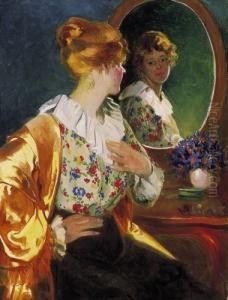
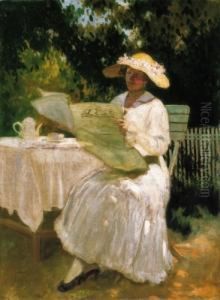
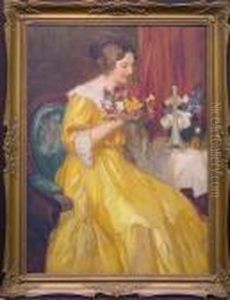
Lajos (Louis) Jambor was a Hungarian-American artist known for his religious-themed works, genre paintings, and murals. Born on December 18, 1884, in Hungary, Jambor received his artistic training at the Royal Academy of Art in Budapest and later in Munich, Germany. His education was classical, focusing on the old masters, which greatly influenced his style and technique.
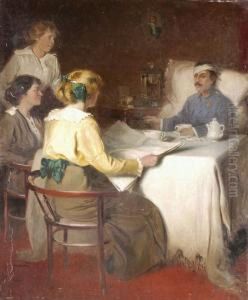
Jambor's early career began in Europe, where he established himself as a skilled painter. With the outbreak of World War I, he served in the military, and his experiences during the war influenced some of his later works. In 1923, seeking new opportunities, Jambor emigrated to the United States and settled in New York City.
In America, Jambor's talent was recognized, and he became known for his ecclesiastical art, including altarpieces, stained glass designs, and murals for churches across the country. His works often featured religious and historical themes, executed with a sense of drama and a rich color palette. Jambor also created illustrations for books and magazines, as well as portraits and landscapes.
Beyond his work in religious art, Jambor was a respected teacher. He taught at the Cooper Union for the Advancement of Science and Art and at the National Academy of Design, influencing a generation of American artists.
Throughout his career, Jambor participated in numerous exhibitions and received various awards for his art. His works are part of several collections, both public and private, and continue to be appreciated for their craftsmanship and emotional depth.
Louis Jambor passed away on February 14, 1955, in New York, leaving behind a legacy as a prominent artist of his time, particularly in the realm of religious art. His contributions to the art world are remembered for their adherence to classical traditions infused with a personal and spiritual expression.
Copyright 2010 - 2026 by PlentyOfPaintings.com All rights reserved. - Your Paintings of Choice


