Alessio Issupoff Paintings
Alessio Issupoff, born in 1889 in Vyatka, Russia, was a painter of Russian origin known for his impressionistic style and focus on rural life and landscapes. He studied at the Stroganov Moscow State Academy of Arts and Industry and later at the Moscow School of Painting, Sculpture, and Architecture, where he was influenced by the Russian avant-garde movement.
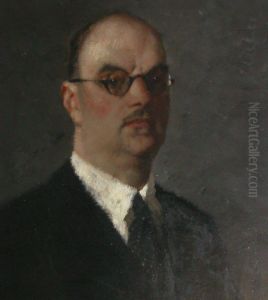
Despite the rise of Soviet Realism in the early 20th century, Issupoff maintained an impressionistic approach to his work. He often depicted the Russian countryside, peasant life, and the beauty of nature in his paintings. In addition to landscapes, Issupoff also painted portraits and still lifes, demonstrating a versatile command of different genres.
After the Russian Revolution, Issupoff, like many artists of the time, faced challenges due to the changing political and cultural landscape. Nevertheless, he continued to work and exhibit his art. His work was recognized for its technical mastery and emotional depth, capturing the essence of Russian life and the transformation of the country during a tumultuous period.
Alessio Issupoff's career spanned across a significant period in Russian history, which included World War I, the Russian Revolution, and the subsequent Soviet era. Despite the state's push towards Soviet Realism, Issupoff's style remained rooted in the impressionistic tradition, making his work stand out in the context of the art of his time.
He passed away in 1957, leaving behind a legacy of art that provides a window into the Russian soul and landscape during a time of great change. His paintings continue to be appreciated for their beauty, historical value, and the skill with which they were created.
Copyright 2010 - 2026 by PlentyOfPaintings.com All rights reserved. - Your Paintings of Choice


