Alfred Sohn-Rethel Paintings
Alfred Sohn-Rethel was a German painter and intellectual whose work and thought spanned across various fields, including economics, philosophy, and art history. Born on January 4, 1904, in Neuilly-sur-Seine, France, he grew up in a culturally rich environment that significantly influenced his intellectual and artistic development. Throughout his career, Sohn-Rethel was deeply engaged with the critical theory of the Frankfurt School and was closely associated with key figures such as Theodor W. Adorno and Max Horkheimer. His interdisciplinary approach allowed him to explore the intersections between economic systems, philosophical concepts, and artistic practices.
Sohn-Rethel's theoretical work is perhaps best known for his concept of 'real abstraction', which refers to the process by which the abstract and complex systems of capitalism become manifest in the social and cultural spheres. He argued that the abstract nature of commodity exchange under capitalism has profound effects on human cognition and social relations, a theory that has had a lasting impact on critical theory and cultural studies. Despite his significant contributions to philosophy and economics, Sohn-Rethel's work remained relatively obscure until the late 20th century, when there was a renewed interest in his ideas among scholars and intellectuals.
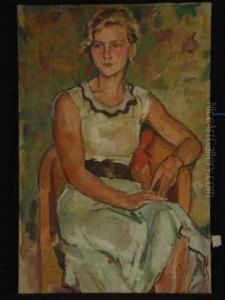
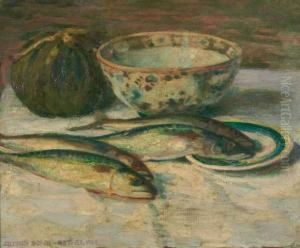
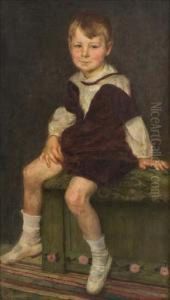
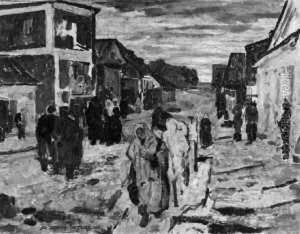
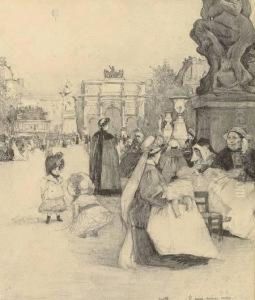
As an artist, Sohn-Rethel's work was less known than his theoretical contributions, but he maintained a lifelong commitment to painting and drawing. His artistic output reflects his intellectual concerns, often exploring themes of alienation, modernity, and the impact of capitalism on culture and society. Though he did not achieve the same level of recognition as some of his contemporaries in the visual arts, his work is appreciated for its depth and its critical engagement with the social and economic conditions of the 20th century.
Alfred Sohn-Rethel passed away on April 8, 1990, in Bremen, Germany. Today, his work is recognized for its pioneering insights into the relationship between economic systems, culture, and cognition. His interdisciplinary approach continues to inspire scholars and artists alike, ensuring his place in the history of 20th-century intellectual thought and cultural criticism.

Copyright 2010 - 2026 by PlentyOfPaintings.com All rights reserved. - Your Paintings of Choice


