Ernst Wilhelm H. Eitner Paintings
Ernst Wilhelm Heinrich Eitner was a German landscape painter, born on April 29, 1867, in Lübeck, a historic city in northern Germany. He was part of the Hamburgische Künstlerverein, an association of artists in Hamburg. Eitner studied at the Weimar Saxon-Grand Ducal Art School from 1886 to 1889, where he was taught by Theodor Hagen, a pioneer of plein air painting in Germany. This early exposure to plein air techniques had a lasting influence on Eitner's artistic style.
After his studies in Weimar, Eitner traveled extensively, which was common for artists of his time, to further his experience and exposure to different artistic influences. He spent significant time in France, particularly in Paris, where he was influenced by the French Impressionists. Their use of light and color, as well as their focus on capturing the moment, can be seen in Eitner's later works.
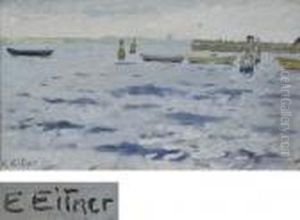
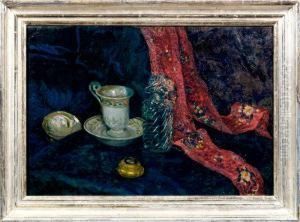
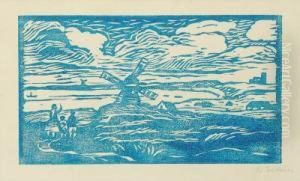
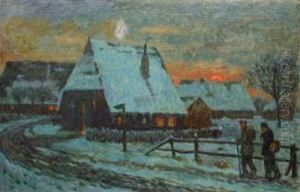
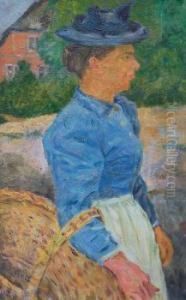
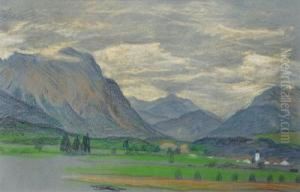
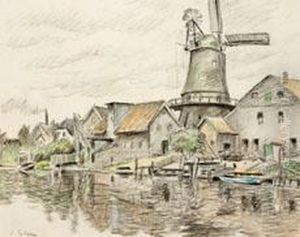
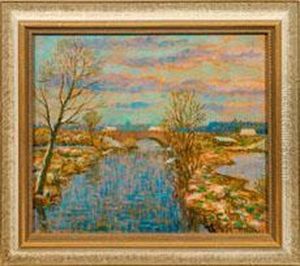
Eitner returned to Hamburg in 1892 and became a significant figure in the Hamburg art scene. His work during this period was characterized by his delicate and atmospheric depiction of northern German landscapes and rural scenes. He often painted the marshes, rivers, and the countryside of the area, capturing the unique light and mood of the region.
Throughout his career, Eitner exhibited his works in various art shows, including the prestigious Berlin Secession. His paintings were well-received, and he gained a reputation for his subtle yet evocative landscapes. He was a member of several art societies and contributed to the development of the local art community.
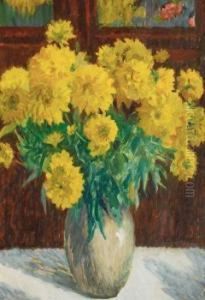
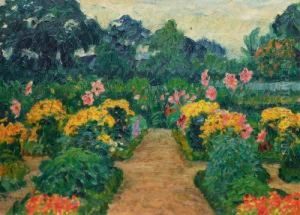
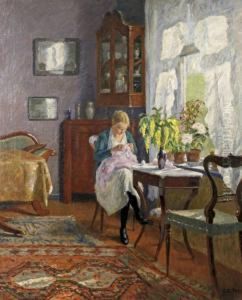
Eitner's art is characterized by a blend of impressionistic light and color with a realistic representation of the landscape, a style sometimes referred to as 'Impressionistic Realism.' He captured the changing effects of light and atmosphere with a gentle touch and a palette that was often dominated by cool tones, reflecting the northern German climate.
During his later years, Eitner continued to paint, but his works from this period have not been as widely studied as those from his earlier years. He passed away on February 11, 1955, in his hometown of Lübeck. Today, Ernst Eitner is remembered as an important artist of the Hamburg school of painting and his works are held in several German museums, reflecting his contribution to the art of his time.
Copyright 2010 - 2026 by PlentyOfPaintings.com All rights reserved. - Your Paintings of Choice


