Gennaro Favai Paintings
Gennaro Favai was an Italian artist born on September 17, 1879, in Venice, Italy. He emerged as a painter with a distinctive style that combined elements of symbolism and Art Nouveau, often infused with a sense of melancholy and a strong use of color. Favai's work is characterized by an ethereal quality and often features dreamlike landscapes and figures.
Trained at the Academy of Fine Arts in Venice, Favai was influenced by the works of other Venetian artists and the unique luminosity of the city. He participated in various exhibitions, including the Venice Biennale, where he gained recognition for his artistic contributions. Throughout his career, Favai developed a palette that was rich and expressive, reflecting the changing moods of nature and the human spirit.
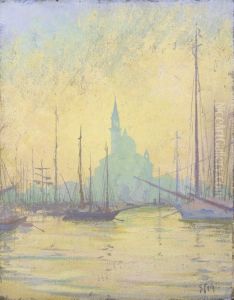
During the early 20th century, Favai's art evolved, reflecting the broader changes in European art movements of the time. However, he maintained a distinctive personal style that set his work apart from that of his contemporaries. His paintings often depicted the serene and mysterious aspects of Venice, capturing the city's atmospheric conditions and the subtle interplay of light and water.
Favai was also known for his work as an illustrator and graphic designer. He created illustrations for books and periodicals, which further showcased his versatility as an artist. Favai's illustrations carried the same haunting and poetic qualities found in his paintings.
After a long and productive career, Gennaro Favai passed away on February 15, 1958, in Venice. His artistic legacy remains an important part of the Italian art history, particularly within the context of early 20th-century Venetian art. Favai's paintings continue to be admired for their unique blend of symbolism and a deep appreciation of the natural and mystical world.
Copyright 2010 - 2026 by PlentyOfPaintings.com All rights reserved. - Your Paintings of Choice


