Jacob Nieweg Paintings
Jacob Nieweg was a Dutch painter born on July 4, 1877, in Amsterdam, the Netherlands. Nieweg is primarily known for his landscape paintings, particularly those depicting the Dutch countryside. His work is characterized by a keen observation of nature and a distinctive use of color and light that reflects the changing seasons and times of day.
Nieweg's early life was rather conventional. He initially pursued a career in teaching and became a drawing instructor. His passion for art, however, led him to develop his skills in painting alongside his teaching career. He was largely self-taught, which gave his work a unique and personal style that was not heavily influenced by the academic art scene of the time.
During his career, Jacob Nieweg became part of the art movement known as the 'Amsterdamse School,' which was prominent in the Netherlands from 1910 until about 1930. This movement is best known for its architectural achievements, but it also had an impact on visual arts, with an emphasis on individual expression and an often emotional style.
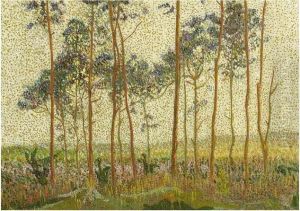
Nieweg's paintings are tranquil and contemplative, often devoid of human figures, focusing instead on the serene beauty of the natural environment. He painted various subjects, from the traditional Dutch polders and canals to the more intimate settings of gardens and orchards. His work resonated with a sense of peacefulness and a deep appreciation for the landscape.
Despite his talent, Jacob Nieweg did not gain widespread recognition during his lifetime. However, his paintings have since been appreciated for their contribution to Dutch landscape painting, and his works are part of various collections in the Netherlands.
Jacob Nieweg passed away on August 10, 1955. His legacy remains in the quiet beauty of his paintings, which continue to be admired by art enthusiasts and collectors. Nieweg's work is a testament to the enduring allure of the Dutch landscape and the power of art to capture the essence of a place.

Copyright 2010 - 2026 by PlentyOfPaintings.com All rights reserved. - Your Paintings of Choice


