Karl Theodor Huber Paintings
Karl Theodor Huber was a Swiss painter and graphic artist born on May 23, 1872, in Basel, Switzerland. He was notably recognized for his contributions to Swiss art and his role as a teacher, influencing a generation of Swiss artists.
Huber's education in art began at the Gewerbeschule (School of Applied Arts) in Basel, where he initially trained as a lithographer. His early work was marked by the precision and detail required by this craft. However, his artistic ambition led him to further his studies. He continued his education at the Academy of Fine Arts in Munich, Germany, where he honed his skills and absorbed the influences of contemporary German art.
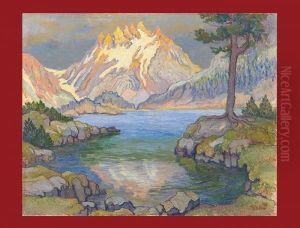
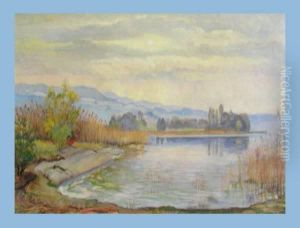
Throughout his career, Huber was known for his versatility, mastering various techniques such as oil painting, watercolor, and printmaking. His subject matter ranged from landscapes and still lifes to portraits and urban scenes. Huber's style evolved over time, reflecting the influence of Impressionism and Post-Impressionism, and later incorporating elements of Expressionism.
In addition to his own artistic practice, Huber was a dedicated educator. He taught at the Allgemeine Gewerbeschule in Basel, where he influenced many young artists with his rigorous approach to technique and his encouragement of individual expression.
Huber's work was exhibited widely during his lifetime, both in Switzerland and internationally, and he received several awards and honors. His legacy continues to be celebrated in Swiss art history, and his works can be found in many public and private collections.
Karl Theodor Huber passed away on February 3, 1955, in Basel. His contribution to Swiss art, particularly in the realm of education, remains an important part of his enduring legacy.
Copyright 2010 - 2026 by PlentyOfPaintings.com All rights reserved. - Your Paintings of Choice


