Marius J. Richters Paintings
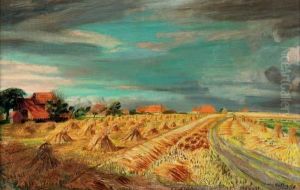
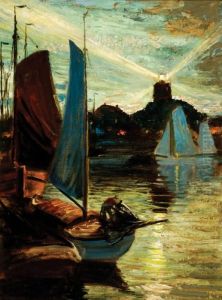
Marius J. Richters, born in Rotterdam, Netherlands, in 1878, was a prominent Dutch artist known for his versatility across various forms of art, including painting, drawing, and graphic design. His works often reflect a deep connection to the landscape and urban life of the Netherlands, capturing the essence of Dutch culture and environment during the first half of the 20th century.
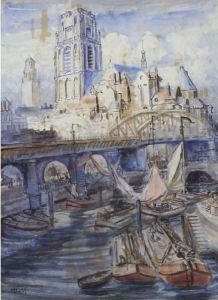
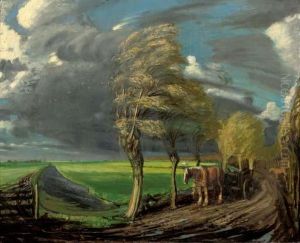
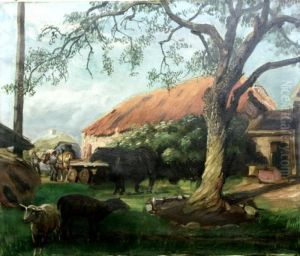
Richters received his artistic training at the Academy of Visual Arts in Rotterdam, where he developed a distinctive style that blended elements of realism and impressionism. Early in his career, he focused on landscapes and cityscapes, rendering scenes of Rotterdam and its surroundings with a keen eye for detail and a profound sense of atmosphere.
As his career progressed, Richters expanded his repertoire to include murals and graphic design, areas in which he achieved significant acclaim. His murals, found in public buildings and churches throughout the Netherlands, are celebrated for their dynamic composition and vibrant portrayal of historical and cultural themes.
In addition to his work as an artist, Richters played a critical role in the Dutch art community, serving as a mentor to younger artists and contributing to the development of art education in Rotterdam. His influence extended beyond his own generation, helping to shape the direction of Dutch art in the 20th century.
Marius J. Richters passed away in 1955, leaving behind a legacy of artistic innovation and a body of work that continues to be admired for its depth, beauty, and historical significance. His contributions to Dutch art have made him a key figure in the country's cultural heritage, celebrated for his ability to capture the spirit of the Netherlands in his diverse and compelling works.
Copyright 2010 - 2026 by PlentyOfPaintings.com All rights reserved. - Your Paintings of Choice


