Rudolf Baschant Paintings
Rudolf Baschant was an Austrian painter and graphic artist born on January 16, 1883, in Vienna. As an artist, Baschant is less known compared to his more famous contemporaries, but he made contributions to the art world through his unique style and perspective.
Baschant's early years were spent in Vienna, where he developed his interest in art. He studied at the Academy of Fine Arts Vienna, which was the premier institution for art education in Austria at the time. Here, he would have been exposed to the various artistic movements of the late 19th and early 20th centuries, which would have influenced his own artistic development.
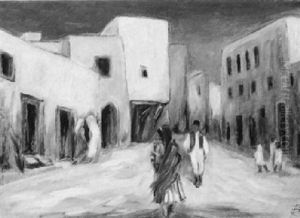
Throughout his career, Baschant worked in various mediums, including painting, graphic art, and illustration. His style was characterized by a blend of realism and impressionism, with a strong emphasis on light and color. Baschant's subject matter often included landscapes, urban scenes, and occasionally portraits, showcasing his versatility as an artist.
During his lifetime, Baschant exhibited his work in various venues, contributing to the vibrant art scene of early 20th-century Vienna. However, he did not achieve the same level of fame as some of his contemporaries. Despite this, his works were appreciated for their craftsmanship and aesthetic qualities.
Rudolf Baschant's career was inevitably impacted by the World Wars, as were the careers of many European artists of his time. The First World War, in particular, brought about significant changes in the cultural landscape, and Baschant, like many others, had to navigate these changes.
After a life dedicated to art, Baschant passed away on November 19, 1955, in Vienna. While not widely known today, his works are part of the cultural heritage of Austria and can be found in private collections and possibly in some Austrian museums. His contributions to the art world continue to be recognized by art historians and collectors who admire the quiet beauty and technical skill evident in his works.
Copyright 2010 - 2026 by PlentyOfPaintings.com All rights reserved. - Your Paintings of Choice


