William Hardy Wilson Paintings
William Hardy Wilson was a pivotal figure in Australian architecture, known for his significant contributions to the development of a distinctive Australian architectural style. Born on February 14, 1881, in Campbelltown, New South Wales, Wilson was deeply influenced by the natural beauty and historic architecture of his homeland from a young age. This influence would later be profoundly reflected in his architectural and artistic endeavors. Wilson pursued his education in architecture at the University of Sydney, where he not only honed his technical skills but also developed a philosophy that emphasized the importance of designing buildings that were in harmony with their natural surroundings and cultural context.
After completing his studies, Wilson embarked on a journey that would greatly influence his architectural style and philosophy. In 1905, he traveled to the United States and Europe, where he was exposed to a variety of architectural styles. However, it was the simplicity and harmony of Georgian architecture and the Arts and Crafts movement that had a lasting impact on his work. Upon returning to Australia, Wilson, along with his contemporaries, became a leading advocate for the Australian Arts and Crafts movement, which emphasized handcraftsmanship, the use of local materials, and an architecture reflective of Australia's unique landscape and climate.
Throughout his career, Wilson designed a number of residential and public buildings that were notable for their elegance, simplicity, and sensitivity to the Australian environment. His works often featured traditional Australian verandas, expansive windows to capture natural light, and harmonious integration with the landscape. Wilson's architectural legacy includes such iconic buildings as the Eryldene house in Gordon, Sydney, which is considered a masterpiece of Australian domestic architecture and a testament to his design philosophy.
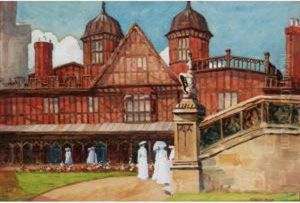
In addition to his architectural work, Wilson was also an accomplished artist and author. He published several books on architecture and design, including 'The Cow Pasture Road' (1920) and 'Old Colonial Architecture in New South Wales and Tasmania' (1924), which were instrumental in promoting the appreciation of Australia's architectural heritage. His drawings and paintings of Australian landscapes and historic buildings played a crucial role in the preservation and recognition of Australian heritage.
Wilson's contributions to Australian architecture and culture were widely recognized during his lifetime, and his legacy continues to be celebrated today. He was a visionary who sought to create a distinct Australian architectural identity that was respectful of the country's unique characteristics and heritage. William Hardy Wilson passed away on March 16, 1955, leaving behind a body of work that continues to inspire architects and designers around the world.
Copyright 2010 - 2026 by PlentyOfPaintings.com All rights reserved. - Your Paintings of Choice


