William Whitehead Ratcliffe Paintings
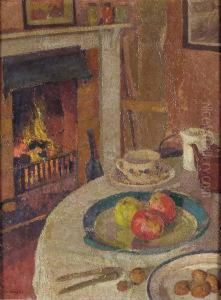
William Whitehead Ratcliffe was an English artist known for his distinctive style and contribution to British art in the late 19th and early 20th centuries. Born on December 27, 1870, in Oldham, Lancashire, Ratcliffe was known for his interior scenes and still-life paintings that captured the essence of domestic life with a sense of tranquility and introspection.
Ratcliffe's interest in art began at an early age, and he pursued his passion by studying at the Manchester School of Art, where he developed his skills and absorbed the influences of the Arts and Crafts movement. He later continued his studies at the Slade School of Fine Art in London, which was renowned for its rigorous academic training and focus on classical techniques.
Throughout his career, Ratcliffe exhibited a preference for painting intimate domestic interiors, often infused with a quiet, reflective mood. His work is characterized by a meticulous attention to detail, harmonious color palettes, and a masterful handling of light and shadow. Ratcliffe's paintings often included figures engrossed in everyday activities, imbuing the scenes with a sense of timelessness and universality.
Ratcliffe's talent was recognized by his peers and art critics alike. He exhibited his work at various prestigious venues, including the Royal Academy of Arts in London and the Walker Art Gallery in Liverpool. Despite this recognition, Ratcliffe remained relatively modest about his achievements and never sought the limelight. He was more interested in the pursuit of his artistic vision than in fame or financial success.
As the art world evolved and tastes changed, Ratcliffe's work remained true to his own aesthetic principles. He did not align himself with any particular art movement, preferring instead to refine his personal style independently of the prevailing trends of the day.
William Whitehead Ratcliffe passed away on November 14, 1955. Although he may not be as widely known as some of his contemporaries, his contributions to British art continue to be appreciated by collectors and art historians. His work is held in several public collections, and his unique approach to painting domestic scenes has earned him a place in the history of British art.
Copyright 2010 - 2026 by PlentyOfPaintings.com All rights reserved. - Your Paintings of Choice


